11 Years in Japan: My Very Strange Career So Far

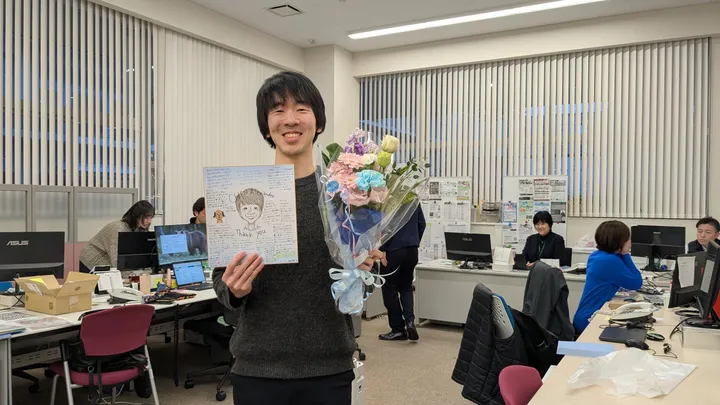
I just realized something… It’s been exactly 11 years since I packed up and moved from the US to Japan! Time flies, and it sure doesn’t slow down either.
In those 11 years, my life and career have gone in directions I never would have guessed. Government job → translator → project manager → software engineer → university staff → freelancer (and many detours in between).
I wanted to take some time to write about how I got here: how I first moved to Japan, landed my first job, and ended up on a completely different career path than the one I planned. If you’re thinking about moving to Japan, or you’re already here and just want another perspective, I hope this is useful or at least an interesting read.
How It Started: The JET Program
I was born and raised in the US, and I studied Japanese and education in university because I thought I wanted to be a teacher.
Spoiler: I am not a teacher. But that was the plan at the time.
(I did write a full year-by-year account of how I learned Japanese during those college years, starting with my first year as a complete beginner, if you’re curious about that part specifically.)
Like a lot of people interested in Japan, I heard about the JET Program and applied, since it seemed like a solid way to get into the country and land a first job. It turned out to be exactly that.
Here’s the funny part: since I actually wanted to become a teacher, the ALT (Assistant Language Teacher) position would have made more sense for me. But the CIR (Coordinator for International Relations) position caught my eye instead, because rather than working in a school, you work in an office environment, 100% in Japanese. I won’t say it sounded more fun, but it sounded like a rarer opportunity.
So I applied for the CIR position. There was a little checkbox on the application that basically said, “If my Japanese isn’t good enough to be a CIR, or there aren’t enough CIR positions, please make me an ALT instead.” I checked that box, of course…and then I actually got the CIR job. Whoops.
I moved to Japan in the summer of 2015, did orientation in Tokyo for a few days, and then flew out to my placement in Izumo, Shimane Prefecture. It was a pretty rural placement in a part of the country that a lot of people (even Japanese people) sadly forget about. And a lot of my friends were like, “Where the hell is that??” But I figured it was a chance to go somewhere I never would have gone otherwise.
(I’ve written a lot more about what the day-to-day work and life were like in another post if you want a deep dive)
Life as a CIR
I was a CIR in Izumo for three years, and the job pretty much matched what I’d heard from other JET alumni. Most days were spent in the office doing translation work, and sometimes interpreting for visitors from abroad. A couple times a week, I’d head out to schools, libraries, or community events to give talks about American culture. Not exactly lessons, but more like presentations, where I just tried to give people in the community a bit more exposure to the world outside Japan.
That part of the job was really fun. I won’t say I loved sitting in the office translating things all day, but getting out and talking with people (many of whom were quite curious about my background) was really rewarding.
Looking back, this job was a great way to ease into working in Japan. There wasn’t a ton of pressure, stress, or overtime. I think that’s pretty typical for CIR positions, though it does vary a lot. I’ve heard that some people get tough placements or difficult coworkers, while others have almost nothing to do. I landed somewhere in the middle, and I’m grateful for that.
That said, I started getting really bored in my second year. The first year, everything was new and there was a lot to learn. But years two and three just felt like exact repeats of year one. So by the time year three wrapped up, I was ready to leave, which was convenient because I actually had to leave. My contracting organization capped CIR contracts at three years (some places allow five, but not mine). The decision was made for me, so I started job hunting.
Job Hunting After JET
This part is stressful for a lot of JET participants, ALTs and CIRs alike. Honestly, I had no idea what I wanted to do next. I had some experience in translation and general office work, a bit of public speaking, and I still had that itch to try teaching. So I did what a lot of people in that position do: I applied to basically everything I thought I was even remotely qualified for. Translation and interpretation jobs, teaching jobs, even a few hospitality gigs at hotels and tourist spots.
I think I applied to over 30 companies. This was back in 2018 — I have no idea if that number is normal now, especially with how the job market has changed since. But eventually, I landed a job at Mercari.
Mercari, Chapter One: Translator
Mercari is a pretty big company now, but when I joined, it was in that awkward growth phase, transitioning from a startup into a major company.
My timing turned out to be great. It’s a competitive company to get into, but they happened to be desperate for translators and interpreters at the time. They were building out international teams and hiring engineers from all over the world, which meant a lot of employees were struggling to communicate with each other due to language barriers. I was brought in to handle internal translation and interpretation at meetings. Good timing, honestly.
I did that for about two years, and it was basically the opposite of my CIR job! Mercari was intense, fast-paced, and busy from morning to evening. Nobody told me to work overtime, but I did it anyways, translating as many documents as I possibly could. Partly because I wanted to make a good impression, and partly because I really wanted to get better at translation. It was a lot harder here than it had been before, since there was a ton of technical engineering/software vocabulary I had to learn from scratch.
I’m compressing two years into a few sentences here, but the tl;dr is: after meeting a lot of people, working with a lot of different teams, and building relationships in the company, I got an offer to switch into a more project-management-focused role, helping engineering teams coordinate big development projects.
That was completely new territory for me, but obviously I took it since it seemed like too good an opportunity to pass up. And honestly, that opportunity never would have shown up if I hadn’t put in those two years of grinding as a translator. It was hard work but I don’t regret the hours I put in (Though I also wouldn’t ever tell anyone to willingly do overtime, since it does take a toll).
Learning to Code
Around the same time I became a project manager, I was also attending a coding bootcamp after work called Le Wagon. I signed up because, after two years of working closely with engineering teams, I actually started getting interested in software.
I want to reiterate that I had zero technical background, and I never considered myself good with technology. But watching software teams build things and ship them to millions of users across the country was fascinating, and I thought, why not learn to code and see where I can take this?
The bootcamp was fun, hard, and intense. I’m pretty sure I lost a lot of hair over it, spending many evenings wondering why my code wouldn’t work (…or in some cases, wondering why my code worked). But joining was definitely the right decision, and I remember thinking, “Okay, I can actually see myself doing software dev for a living.”
(I go into a lot more detail on exactly how this transition worked in a dedicated post if you want to know more)
Becoming an Engineer at Mercari
So, still at Mercari, I requested an internal transfer to an engineering team. This is a real path there — several people before me had made the jump from non-technical roles into engineering. It’s difficult, but possible. There were basically two requirements.
First, obviously, you need the skills. They weren’t going to hand me an engineering title just because I asked nicely. I had to prove I could actually code and build things.
Second, I needed a specific team lined up that wanted to work with me. Mercari wasn’t going to go out of its way to find an open position for me — I had to do that myself, find a team with headcount for a junior engineer, and convince them I was worth taking a chance on. Since I’d already been at the company a few years and knew a lot of engineers, I asked around and found a tech lead who was interested in working with me. From there, I formally made a transfer request to HR and my manager, and things got moving.
The hard part was the interview process, and I mean the full process, the same one they run for external candidates. A technical test (think LeetCode-style algorithm problems), followed by three or four more interviews testing technical knowledge and culture fit. On top of that there was a take-home assignment: build a functional API in Go (a language I never used before), connected to a database and returning specific data.
The whole thing took several months and was quite painful, especially since I was never great at algorithm-style interview questions. But somehow it worked out, and I became an engineer at Mercari. And I was over the moon.
I was a software engineer at a big company, and it was hard to imagine anything that would make my Asian parents happier. I worked as an engineer there for about two and a half years, learned a ton, and only broke a couple things along the way.
Leaving Tech to Try Something Else
This probably sounds dumb and irresponsible right after mentioning how much hard work it took to become an engineer. And it probably was! But hear me out.
Toward the end of those two and a half years, I hit a point where I thought: being an engineer at a big company is fine. Stable income, pays the bills, and all that. But I really, really wasn’t sure it was what I wanted to be doing long-term.
Also, I had been at Mercari for nearly six years at that point, and I was ready for a change. The company had been a huge part of my work & social life that whole time (probably to an unhealthy degree), and there were still other things I wanted to try. So I finally left the company.
The timing worked out well, probably by accident. This was 2024, shortly after the COVID era wound down. I’d been working fully remote and had actually moved from Tokyo to Kyoto, since I like living there more (my favorite city in Japan, for a lot of reasons). Around that same time, Mercari started shifting toward a hybrid setup, wanting people back in the office a couple days a week. Commuting from Kyoto for that would’ve been rough. Not impossible, but I definitely didn’t want to be riding the Shinkansen for 4+ hours roundtrip, several times a week. So leaving when I did worked out.
The Experimental Phase
After that, I entered what I’d call a weird, exploratory chapter of life. Thankfully I already had my permanent residency by then, so I didn’t have to worry about visas, and I had enough savings to get by for a few months without panicking. So I just… tried a bunch of things I was curious about.
I did freelance translation work, a bit of game localization (which was really cool, even though I didn’t do much of it), and freelance writing, including some articles for TokyoDev and Japan Dev (both are great resources if you’re an engineer interested in Japan). I also worked part-time at the Nintendo Museum when it opened in Kyoto that fall (maybe I’ll make a separate post about that experience someday).
I also did some teaching at an after-school and Saturday program for English-speaking kids in Kyoto, helping with English lessons and also coding lessons. We taught kids how to build mini projects and games, mostly using simple tools like Scratch. That was the first time I actually got to be in a classroom as a teacher, which was a lot of fun.
Then I picked up work at a hostel run by some friends, doing hospitality work I’d always been curious about, plus some food prep and service at their cafe and lounge.
For over a year, I bounced between this mix of part-time, in-person work in Kyoto and freelance work on the side. Eventually I hit a point of, “Okay, I’ve tried a bunch of interesting things, but the income isn’t enough to actually live on.” So I decided to go back to full-time work.
Back to Full-Time: A University Job
One thing I’d always wanted to try was working at a university — not as a professor, but more like admin staff, something in the student advisor space. The reason goes back more than 10 years: when I was a student, the staff at my university helped me a lot. I studied abroad, switched majors multiple times, and needed a lot of support along the way.
They were incredibly helpful, and I honestly don’t think I would have graduated without them. Ever since, I’d thought it would be meaningful to be on the other side of that, helping students figure out their lives and careers.
I ended up finding a job at KUAS, a relatively new private university in Japan (that place alone has a whole story I won’t get into here). They were hiring full-time staff, the pay and conditions were better than I expected, and I figured, why not try it? I got the job and worked there for… seven months.
A really short tenure, I know. But after going back to a full-time job with a rigid schedule, I realized I just couldn’t do it anymore. I know that probably sounds really privileged, but I struggled so much with being in the same place every single day. Having already been through a few very different kinds of work, I had a much clearer sense of what fit me and what didn’t.
I liked my coworkers and I liked the students I worked with, but I decided it was better for me to leave and figure out the next thing.
Where I Am Now
So here I am, more or less back where I was before: working part-time a few days a week, doing freelance work on the side, and trying to figure out what personal projects are worth spinning up.
One thing I’m working on now is Mugi, a Japanese learning app mentioned on this very website you’re looking at! I’m taking everything I learned after many years of studying Japanese, and putting it into one app to make language learning easier and more fun.
So I’m not making a stable income right now, or living a life that most people would consider responsible. But I’m back in that experimental phase, trying to figure out how to combine everything I’ve picked up over the last 10–11 years — Japanese and English, translation and language work, a bit of education, and software engineering — into something that works.
Maybe the smart move would have been to specialize early, get really good at one thing, and do that for a decade. But I ended up as a generalist, switching roles every couple of years. No regrets though, just a different path.
In the meantime, I’ll keep sharing stories and lessons from my 10+ years in Japan. If there’s something specific you want to hear about, whether it be about visas, JET, the switch into engineering, freelancing, or whatever, feel free to contact me anytime!
Thanks for reading, and I’ll see you in the next one.