What It's Actually Like to Be a CIR on the JET Program: My 3 Years in Izumo

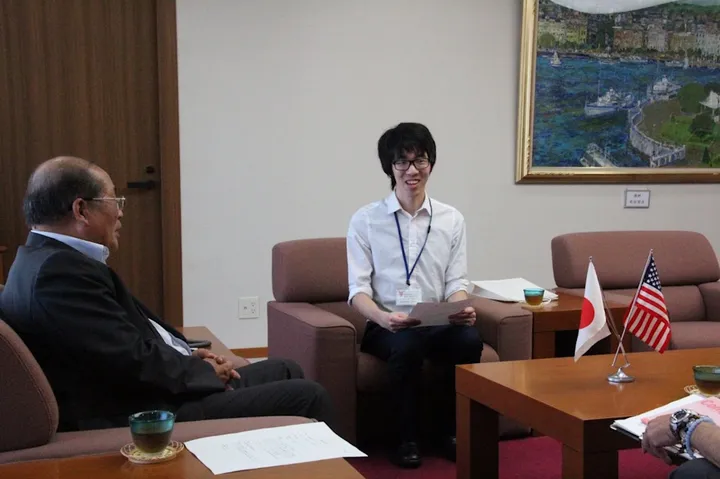
I was on the JET Program for three years, working as a CIR (Coordinator for International Relations) in a small city called Izumo, in Shimane Prefecture. Like a lot of JET participants, this was my first job in Japan. I moved there right after graduating college, and it ended up being my introduction to working in this country.
I just realized it’s July again, which means a new batch of people are getting ready to head to Japan for their JET experience later this month. It’s been about 10 years since I started myself, but I wanted to write up my own experience: what the job actually looked like day to day, what living there was like, and my honest take on whether it’s worth it. I hope it’s useful if you’re heading into JET, or just curious what working in Japan is like.
(This is the detailed version of one chapter from my 11 years in Japan post)
My Placement: Izumo City Hall
I was placed at Izumo City Hall. When I arrived in 2015, the building was fairly new and quite nice (I think they’d just finished construction on it not long before). My office was on the third floor.
We finished orientation in Tokyo, and all the JETs (ALTs and CIRs alike) placed in Shimane Prefecture flew out together on the same flight. After landing, one of my bosses and my predecessor (another American who held the CIR position before me) picked me up from the airport. It was super casual and friendly right from the start: we stopped at a family restaurant called Joyfull on the way, had lunch, and then they took me to the office and got me all set up.
The Department I Worked In
My department was called Kokusai Kouryu Shitsu (国際交流室), basically the international affairs division. We handled things like coordinating visits from guests of other countries, whether for diplomatic or business reasons.
But the bigger part of the job was translation. We translated pretty much every document the city used: things residents needed for move-in procedures, enrolling kids in preschool, applying for health insurance or pension, and all the everyday bureaucracy people have to deal with. Izumo actually had a surprisingly large foreign population thanks to a couple of universities in the area, so we had a fair number of master’s and PhD students from all over the world who needed these documents translated.
We also did a bit of educational outreach. Not really teaching, but visiting schools to give talks about our home countries: what it’s like to grow up in the US, what it’s like living in Japan as a foreigner, that kind of thing. The goal was mostly to get students a little more curious about the world outside Japan.
My Team and Coworkers
Our team was five people. There was our boss, who we called shitsucho (室長), since we were part of a “shitsu” (室) rather than the more common departmental structure where you’d use titles like kacho (課長) or bucho (部長).
Next to him was our main supervisor, whose official title was shunin (主任). She was the direct supervisor for all the JET participants on our team, so she was the person I reported to and worked with most closely.
Then there was our Portuguese interpreter. One thing that surprised me about Izumo: it had a very large Brazilian population, many of Japanese descent, who came to work in local manufacturing (mostly electronics components made by companies like Murata and Fujitsu). A lot of them didn’t speak Japanese or English, so the city hired a dedicated Portuguese-Japanese interpreter. She too was Japanese-Brazilian, fluent in both languages, and an absolute joy to work with.
Across from her was another CIR, from Finland. I got really lucky having her there: she’d already worked professionally as a translator and interpreter in Finland for several years before JET. She was excellent at her job across the board: great translations, great interpreting, and her talks about Finland and Finnish culture at local schools were always entertaining and actually educational. I learned a ton just from watching how she worked. My desk was right next to hers.
Overall, the office was a lot more casual and friendly than I expected going in. There are tons of stereotypes about Japanese work culture, involving brutal overtime, abusive bosses, harassment, and all that. And that is a real problem at plenty of companies and workplaces in Japan; it’s slowly improving, but it’s far from solved everywhere. Still, going into this job without knowing what to expect, I found it was much better than I’d braced for. Everyone just wanted to do their work and go home at a reasonable hour.
My direct supervisor and I did butt heads sometimes. There were moments I thought she was being a bit strict or unreasonable, and it got a little awkward. But looking back, I was a cheeky 22-year-old fresh out of college, pretty immature for my age honestly, and I probably annoyed her more often than she annoyed me. It is what it is.
The Actual Work
As far as day-to-day tasks go, I’d say 60–70% of my job was translation. I think my CIR position ended up being more translation-heavy than some others. A typical day: I’d get into the office, check my email, and usually have a handful of translation requests from other departments in the city. Maybe the insurance department had updated an application form. Maybe the city rolled out new incentives for parents of newborns and needed materials translated.
Occasionally, there’d be tourism-related work too. Despite being pretty far out there and considered fairly rural, Izumo is home to Izumo Taisha, one of Japan’s most important shrines and a major tourist destination.
One of the more absurd translations I did: when Pokémon Go launched in 2016, we had a problem with people wandering around like smartphone zombies, bumping into things on the shrine grounds. So I got to translate a sign for Izumo Taisha that basically read, “Please don’t play Pokémon Go on the shrine grounds.” You get some pretty quirky assignments in a job like this.
I didn’t do as much interpreting: maybe once or twice a week, a foreign resident would come into city hall, run into a language barrier at the counter, and I’d get a call to come interpret. I helped people register addresses, sign up for insurance and pension, that sort of thing. It was pretty cool because I got to meet people with completely different careers and life paths than mine. Quite a few researchers and PhD students from South and Southeast Asia, a couple from Mongolia (I had never actually met anyone from Mongolia before moving to Japan).
The most fun part of the job, though, was the once-or-twice-a-week visits to schools, libraries, or preschools to do talks and workshops. At elementary, junior high, and high schools, I’d basically give this rundown: I grew up in America, here’s what the country is like, here’s what it’s known for, and here’s what you could expect if you visited. I also went fairly often to hoikuen (保育園), basically nursery schools or preschools. The kids there were around two to three years old and barely spoke Japanese yet, let alone English, so a 10-15 minute talk was obviously out of the question. Instead, we’d play games in English, like an English version of musical chairs. We also did the “Head, Shoulders, Knees and Toes” song and dance a lot, which the kids loved and would try to sing along to. It wasn’t really English instruction in any formal sense, but more like just exposure to the sounds and words. I’m not sure how much educational value it had, but we did what we could to make it fun.
Where I Lived and How I Got Around
Like pretty much all JETs, I had my own apartment, arranged and subsidized by the city. It was about a 15-minute bike ride from the office, and I was expected to walk or bike in every day. There was no public transportation to speak of. I was allowed to own a car if I wanted one, and I did end up getting one, but I wasn’t allowed to drive it to work. (I think that came down to insurance: if I got into an accident commuting, it wouldn’t have been covered under workers’ insurance, and since I lived so close to the office anyway, they just didn’t bother enrolling me for that.)
So I biked to work every single day. It was a really nice way to commute, except when the weather was bad. The other downside was that I’ve always been terrible at waking up early, and now I had a job that required it. I also have long-ish hair for a guy, so there were many mornings where I wouldn’t have time to comb it, I would bike to work as fast as I could, and would show up with the wind having turned my hair into an absolute disaster. My supervisor understandably got mad at me a couple times for looking like a mess. Whoops.
The Apartment
The apartment itself was a 2DK: two bedrooms plus a small combined dining and kitchen area. For a Japanese apartment, it was more spacious than I expected, honestly more than I needed. And the best part is that it was cheap! The city heavily subsidized it, so I only paid 10,000 yen a month in rent, and that was the same deal for every JET in my city, ALTs and CIRs alike. We had it pretty good. That said, subsidy amounts do vary a lot by placement, so I wouldn’t count on getting a deal like that; go in expecting to pay a normal amount for rent, and treat any subsidy as a bonus.
The one real downside was that the building was old and not well insulated. Winters got freakishly, uncomfortably cold. There were mornings I could see my breath indoors. It was somehow colder inside than outside, probably a mix of no sunlight and the apartment just trapping cold air. It felt like living in a cardboard box some days. I also didn’t understand how to use the heating properly at first. Eventually I figured out a system: close all the interior doors, hole up in one room, run the heater, and add an electric carpet and some floor insulation. That helped a lot. But coming from the US, where central heating is just a given, that first winter was rough.
The Car
I ended up leasing a car from a small, family-run company that had a good reputation among JETs in the area and was friendly to foreigners. Nothing fancy: a very basic kei car, but cheap, around 15,000 yen a month plus a bit extra for insurance.
I didn’t strictly need a car. Izumo counts as inaka (countryside), but it’s not so remote that you can’t get by on a bike or the occasional bus and train. Having a car just opened up more options: events, activities, places that weren’t reachable by public transportation. Most of the ALTs in my city ended up getting cars too, since many of them worked across different schools scattered around the city. Among the CIRs, though, I think I was the only one who bothered. The others mostly biked or took the train into city hall. It really comes down to personal preference.
The Good Things About Being a CIR
I’ll just say it upfront: I’m really glad I did JET, and I think being a CIR was the best possible way for me to start my career in Japan. It eases you into working in a Japanese environment. They’re forgiving if your Japanese isn’t perfect or if you make mistakes, and while you do have real responsibilities, they’re not overwhelming: there were no high-stakes projects where messing up could cause financial damage or seriously inconvenience a lot of people. It’s a good place to learn without a ton of pressure.
I also got to meet a huge range of people and try a lot of different things. On the work side alone: translation, interpreting, public speaking, some event planning, even a couple of business trips to the US. I interacted with people across the entire age spectrum, from two-year-olds to senior citizens. It’s a job that demands you be a bit social and curious, and while I wouldn’t call myself the most naturally social person, I am a curious one, so that worked in my favor.
There was a lot to learn overall, and by the end of my three years, I was surprised at how much I actually had to put on my resume and talk about in job interviews. Being a CIR gives you a really solid, talkable skill set.
One more thing worth mentioning: the vacation policy was generous. Legally, workplaces in Japan only need to give a minimum of 10 paid vacation days a year, which is terrible. But my placement gave us 20, which is very generous by Japanese standards. Even better, when I got sick (which happened a couple of times), I was allowed to take sick leave separately instead of burning through my paid vacation days. I think a lot of people don’t realize this is even an option. I remember my bosses actually contacting CLAIR (the organization that runs the JET Program) to confirm how to handle it, and it turned out those days off were essentially free, separate from my allotment of paid vacation days.
The Not-So-Good Things
The first downside is a bit expected: the work culture is pretty rigid. I mentioned it was more casual and friendly than I expected, and that’s true, but it’s still a Japanese office environment. Which means dressing formally and wearing a necktie outside of summer months. I personally really dislike dressing formally, so that was quite a pain in the neck 🥁
They were also strict about time. Our official hours were 9:15 to 5:15, and thankfully we could pretty much always leave right on time. But in the mornings, you were expected to be in the office and ready to work by 9:00. If you arrived at 9:15, the technical start time, that counted as late, and people noticed. I was late more than a few times, because I still, to this day, am bad at waking up. When that happened, I had to go apologize (formally bowing and everything) to the head of the department above ours, essentially my boss’s boss’s boss, someone I’d otherwise never interact with. Very Japanese-office energy. Lunch was also strictly 12:00 to 1:00pm with very little flexibility. Everyone went to the same lunch spots at the same time, so it was always crowded, and you had to be back on time.
The other issue, common to a lot of jobs to be fair, was the unevenness of the workload. There were busy times, but there were also times where there was literally nothing to do. And I mean nothing. I had entire days where I just sat in the office pretending to look busy. In hindsight, I should have taken the initiative to find or invent new projects, but at the time I just didn’t have the inspiration for it.
This got especially noticeable after the first year. During year one, everything was new and I was learning constantly, which was great. Years two and three were basically exact repeats of year one: same schedule of events, same schools, same people (which was nice in its own way, but also a sign I wasn’t growing anymore). I was comfortable and I knew exactly what to expect, but I wasn’t being challenged. By year three, I was mentally checked out.
To be clear, plenty of CIRs stay three to five years and really enjoy the whole experience from start to finish. It can be a very comfortable place to be. I think I’m just someone who craves novelty more than most, so doing the same thing for three straight years wasn’t great for me specifically. That doesn’t mean it won’t be great for you: you know yourself better than I do, so take my experience with a grain of salt.
Overall Thoughts
Being a CIR on JET was, overall, a really good decision. I went in without knowing whether I’d enjoy it, and it worked out. After my CIR contract ended, I landed a new job in Tokyo and moved there. And by now, I’ve been in Japan for almost 11 years. I eventually made my way to Kyoto too, which is my favorite city in Japan and where I still live now. I’m comfortably settled here, I have a family here, and I have no plans to move back to the US anytime soon. JET was the first stepping stone that got me into the country and set me on the path to where I am now, and I’m really glad I did it.
Whether you go in as an ALT or a CIR, both routes open up a lot of doors. A lot of the ALTs I met during my time ended up staying in Japan long-term; some got their teaching licenses and became full-time teachers, but plenty of others branched into completely different fields: sales, tech, university admin work, even becoming professors. There’s a wide range of paths available if you go looking for them. In my own case, that path eventually led me into software engineering, of all things, not something I ever expected when I was translating city hall pamphlets in Izumo.
If you want to hear more about what I’ve done and learned over my decade-plus in Japan, I hope you’ll stick around. And feel free to send a message if you have specific questions about JET, and I’m happy to help where I can.